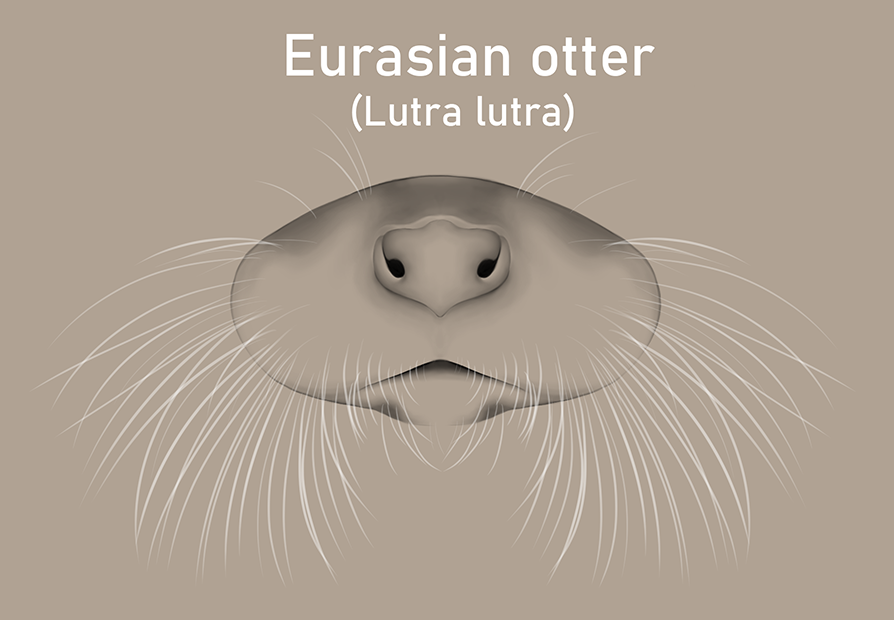
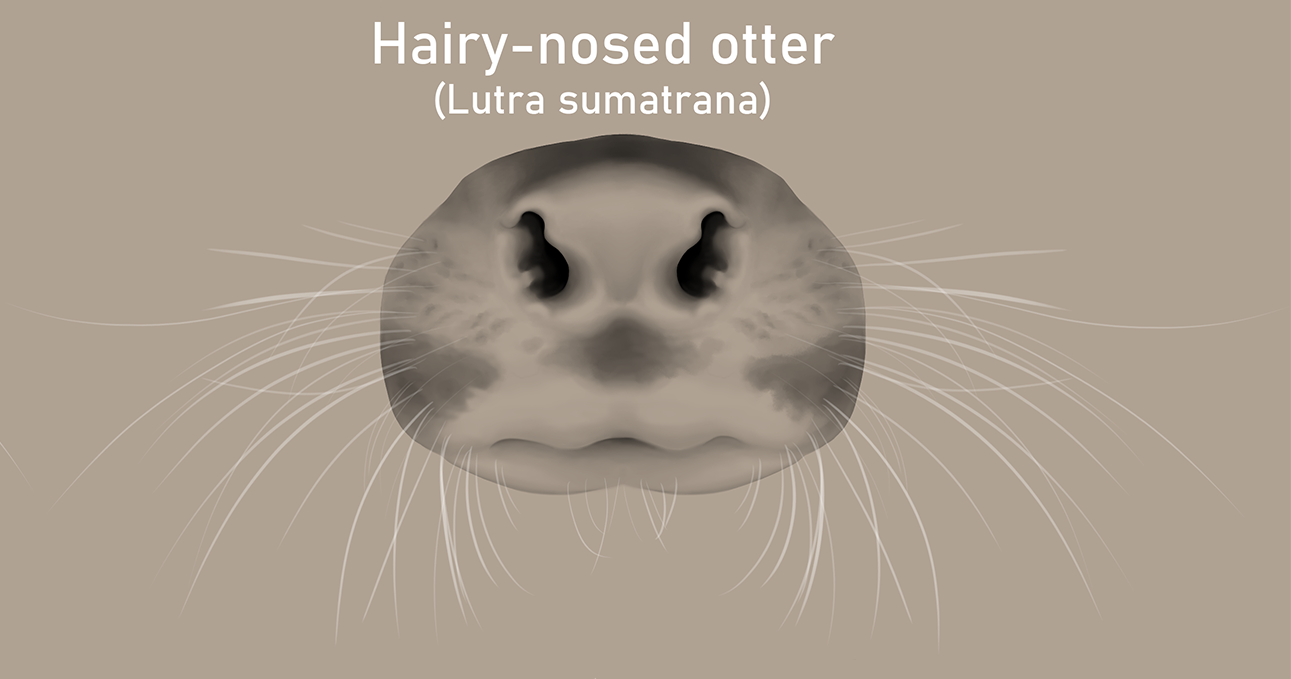
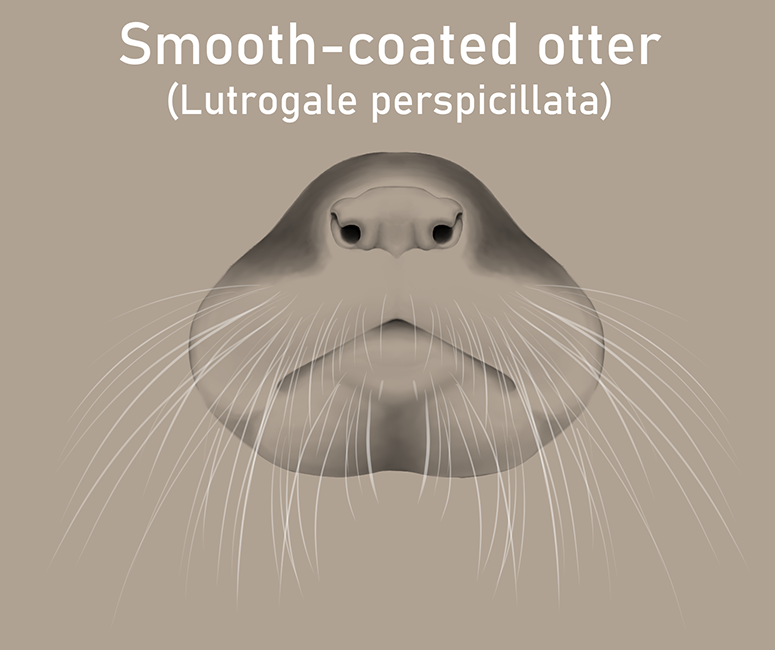
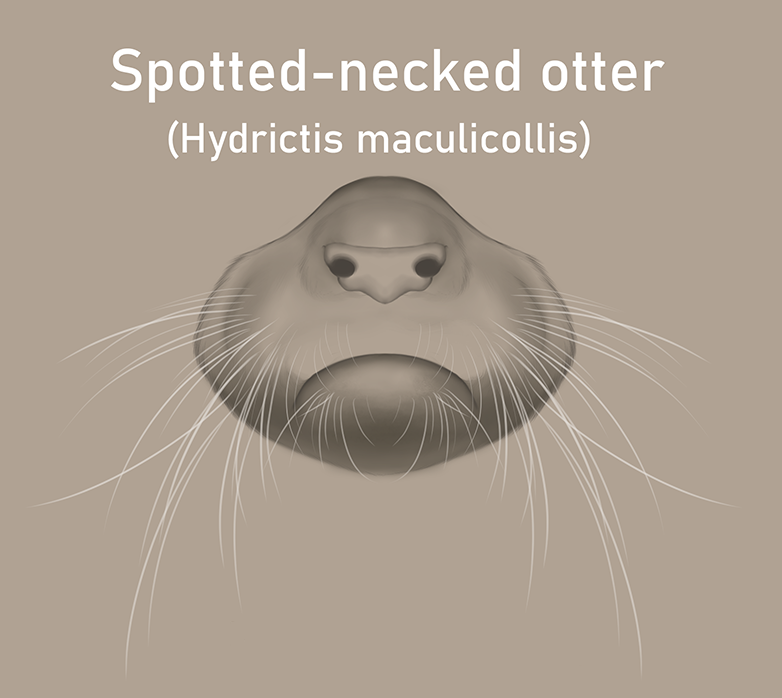
Old World Otters are species within the genus Lutra that inhabit the continents of Africa, Europe, and Asia. The spotted-necked otter (Hydrictis maculicollis) is the only Old World species that is not classified under the genus Lutra.
Table of Contents
- • African Clawless Otter (L. capensis)
- • Asian Small-Clawed Otter (L. cinerea)
- • Congo Clawless Otter (L. congicus)
- • Eurasian Otter (L. lutra)
- • Hairy-Nosed Otter (L. sumatrana)
- • Smooth-Coated Otter (L. perspicillata)
- The species below are not directly related to those above.
- – Spotted-Necked Otter (H. maculicollis)
#1 African Clawless Otter (Lutra capensis)


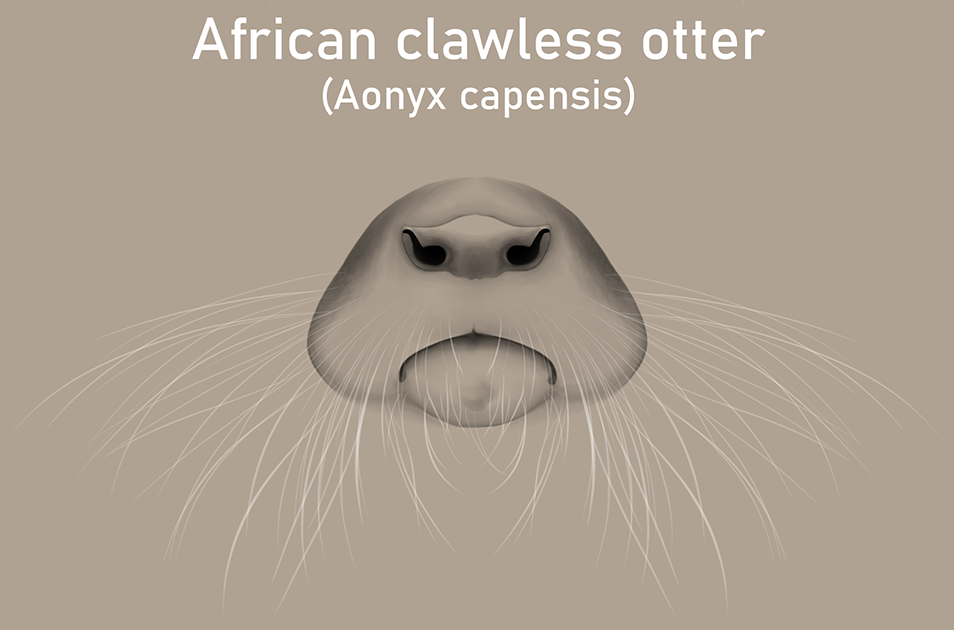
The African clawless otter, also known as the Cape clawless otter or groot otter, is the second-largest freshwater species of otter, and the largest African otter species. They are closely related to the Congo clawless otter, which is regarded as the same species by some authorities, but the IUCN Otter Specialist Group and the IOSF view them as a separate species.
Appearance
They are chestnut in colour, and have distinctive white facial markings on the upper lips, the sides of the face, neck, throat, belly, and lower ears. Their front paws are basically hands; they are very dexterous and can be used to carry objects. The fingers are clawless and have no webbing between them. The hind paws have partial webbing and rudimentary claws.(1)
Habitat
African clawless otters can live in a wide variety of habitats, including rivers, lakes, estuaries, mangroves, lowland forests, savannah and deserts, as long as there is enough fresh water and prey available.(2) While they mostly occur in fresh water areas, they may also live in marine areas but require fresh water for drinking.(1) They can also live up to 3,000 metres (9,842 feet) above sea level. They prefer shallow waters over deep waters.(2)
Behaviour
These otters are mainly crepuscular and tend to be more nocturnal in urban areas.(1)(2) They are mostly solitary in fresh water areas but can form family groups.(1) They mainly hunt by digging with their sensitive fingers through mud.(2) After hunting they roll in grass or sand to dry off and use a nearby latrine.(1)
African clawless otters have a variety of vocalisations, including low pitched and high pitched whistles, grunts, squeals, moaning, mewing and snuffling noises.(1) Females can carry their young in their hands and walk bipedally when they do. Small objects can be held against the chest.(1)
Pups are very playful; they like to throw pebbles into the water and try to catch them before they hit the bottom, or submerge floating objects and watch them move upwards.(1)
Reproduction
Mating usually occurs in December and gestation is about 2 months.(1) There are about 2 to 5 cubs in a litter and they stay with their mother for about a year. The father may also help with taking care of the cubs.(2)
Diet
Their diet consists mostly of crabs but they also eat frogs, lobsters, insects and fish. Their diet often depends on the area and season. During the winter they especially eat more fish instead of crabs and may occasionally hunt for waterfowl.(2)
Threats
African clawless otters are sometimes killed by fishermen since they are seen as competition. They may also be hunted for fur and traditional medicine. The biggest problems are habitat destruction and pollution though.(2)

Body length: 113–163 cm / 45–64 in
Tail length: 46.5–51.5 cm / 18–20 in
Weight: 10–36 kg / 22-80 lb
Lifespan: Up to 12 years (wild), up to 15 years (captivity)
Range: South Africa to Ethiopia and across the continent to Senegal.
Conservation status: Near threatened
Subfamily: Lutrinae
Recognised subspecies(3)
- Cape Clawless Otter – (L. c. capensis)
- East African Clawless Otter – (L. c. hindei)
- Ethiopian Clawless Otter – (L. c. meneleki)
- West African Clawless Otter – (L. c. microdon)
- Lake Victoria Clawless Otter – (L. c. philippsi)
- Larivière, Serge. “Aonyx capensis”. Mammalian species 2001.671 (2001): 1-6.
- Yoxon, Paul, and Grace M. Yoxon. “Otters of the world”. Whittles Publishing, 2014.
- Wozencraft, W.C. (2005). “Aonyx capensis“. In Wilson, D.E.; Reeder, D.M (eds.). Mammal Species of the World: A Taxonomic and Geographic Reference (3rd ed.). Johns Hopkins University Press. pp. 532–628
#2 Asian Small-Clawed Otter (Lutra cinerea)


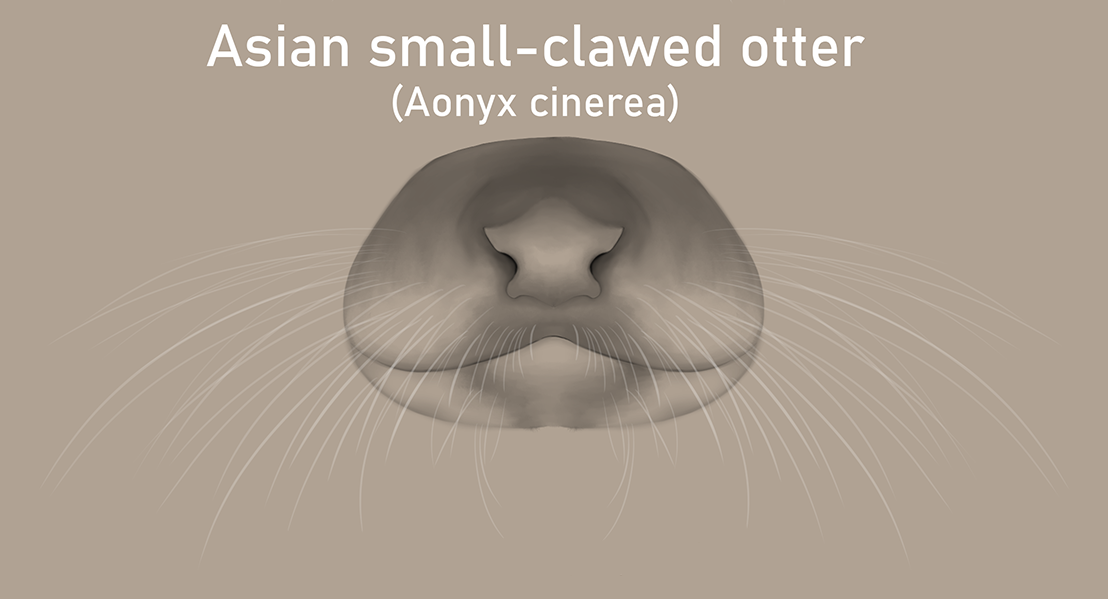
The Asian small-clawed otter, also known as the oriental small-clawed otter, is the smallest species of otter native to southwest Asia. They are the most common species of otter found in zoos and perhaps even in the exotic pet market.
Appearance
Their fur is greyish dark brown with light grey markings on the throat, lips and cheeks. Their paws are like hands with very dexterous fingers and very little webbing and, as their name suggests, small rudimentary claws. The head is distinctly rounded and has round ears. Their legs are thin and their tails are relatively short.
Habitat
Asian small-clawed otters can live in a wide variety of fresh water environments, such as rivers, streams, lakes, mangroves, marshes, paddy fields and coasts, but they generally prefer shallow water. They can also live in mountain streams up to 2,000 metres (6,561.6 feet) above sea level.(1)(2)
Behaviour
Asian small-clawed otters live in family groups led by the alpha female. Once one of the alpha couple dies, the other group members disperse and look for a mate to start a new family.(1)
Reproduction
Much like wolves, the alpha couple are the only ones allowed to mate, but the whole group helps raising the pups. The mother gives birth to one to six pups after the father brings bedding into the holt. In the early stage the father feeds the mother and the pups.(1)
Asian small-clawed otters can interbreed with smooth coated otters. A whole population of hybrids has been discovered in Singapore.(3)
Diet
They mainly eat invertebrates, especially crustaceans, such as shrimps and crabs, which they catch using their sensitive fingers, but they can also eat fish, small amphibians.(1)(4) They leave clams to dry out in the sun and open up, so they can access the inside.(5)
Threats
While Asian small-clawed otters have a wide distribution, they face many threats. Logging and the draining of swamps for development causes loss of suitable habitats. Agriculture and industry also pollute the environment with pesticides and heavy metals, which accumulate in the otters’ prey and poisons them.(2)
Pet otters, otter cafés, and poaching
Despite being a wild animal, the Asian small-clawed otter is highly infantilized in social media. There are many videos online of people showing off their pet Asian small-clawed otters, and while some owners seemingly have the time and resources to properly care for them, many people who are influence by these videos to purchase otters of their own likely know little to nothing about how to care for them, let alone have the means to. Otters are extremely curious and require a lot of space to explore. They can be destructive of property and even tame ones can become aggressive during mating season. Exotic pets also require specialised veterinary care, which will generally never be of the same quality that domestic pets receive, given their medical needs are not as well understood.
Otter cafés in Japan are also a controversial matter among animal rights groups. These establishments allow tourists and locals to pet and spend time with the otters. The concern is that many of these otters are stressed, live in poor conditions, and are fed an unsuitable diet.(6)(7)
Due to the increased demand for pet otters, low-welfare backyard breeding facilities have been on the rise, as well as illegal trafficking in Indonesia, Malaysia, and especially Thailand. In some villages, people regard the Asian small-clawed otter as a pest, since they will often eat their fish and ruin their paddy fields. Farmers are known shoot and kill the parents, and if the pups (baby otters) are found, they are sometimes sold into the exotic pet trade. Poachers are also reported to kill the parents because of the money selling their pups can bring.(7)
The Asian small-clawed otter is recognised as vulnerable by the IUCN.(2) Poaching and illegal trafficking to feed Southeast Asia’s appetite for pet otters has not helped matters, and social media’s interest in pet otter videos continues to blind much of the public from the reality of the species’ situation.
They are not Japanese otters
Asian small-clawed otters that are kept as pets in Japan are sometimes erroneously and misleadingly called “Japanese otters” in social media. They are not even native to Japan. The true Japanese otter († Lutra nippon) was a completely different species. They were declared extinct by the country’s Ministry of the Environment in 2012.(8)

Body length: 470–610 mm / (18–24 in)
Tail length: 260–350 mm / (10–14 in)
Weight: 1–5 kg / (2–11 lb)
Lifespan: Unknown (wild), up to 16 years (captivity)
Range: Mangrove swamps and freshwater wetlands in south and southeast Asia.
Conservation status: Vulnerable
Subfamily: Lutrinae
Recognised subspecies(9)
- North Asian Small-Clawed Otter – (Lutra cinerea cinereus)
- Southeast Asian Small-Clawed Otter – (Lutra cinerea concolor)
- South Indian Small-Cawed Otter – (Lutra cinerea nirnai)
- Yoxon, Paul, and Grace M. Yoxon.“Otters of the world”. Whittles Publishing, 2014.
- Wright, L., de Silva, P.K., Chan, B., Reza Lubis, I. & Basak, S. 2021. “Aonyx cinereus“. The IUCN Red List of Threatened Species 2021: e.T44166A164580923. Accessed on 05 February 2022.
- Moretti, Beatrice, et al. “Phylogeography of the smooth-coated otter (Lutrogale perspicillata): distinct evolutionary lineages and hybridization with the Asian small-clawed otter (Aonyx cinereus).” Scientific reports 7.1 (2017): 1-13.
- Wild Wednesday. “Asian Small Clawed Otter“. By Erika, Mill Mountain Zoo, 2018.
- Timmins, W. H. (1971). “Observations on breeding the oriental short clawed otter Amblonyx cinerea at Chester Zoo“. International Zoo Yearbook. 11: 109–111.
- Okamoto, Yumiko, et al. “The Situation of Pet Otters in Japan–Warning by Vets“. IUCN Otter Spec. Group Bull 37.2 (2020): 71-79. p. 71
- World Animal Protection. 18 May, 2020. “Why You Shouldn’t Share That Cute Pet Otter Video“. Accessed 18 May, 2021.
- Mainichi jp. Japan: The Mainichi Newspapers. 28 August, 2012. “Japanese river otter declared extinct“. Archived from the original on 1 September, 2012. Accessed 18 May, 2021.
- Wilson, Don E. & Reeder, DeeAnn M. (Editors) 2005. Aonyx cinerea in Mammal Species of the World. – A Taxonomic and Geographic Reference.
#3 Congo Clawless Otter (Lutra congica)


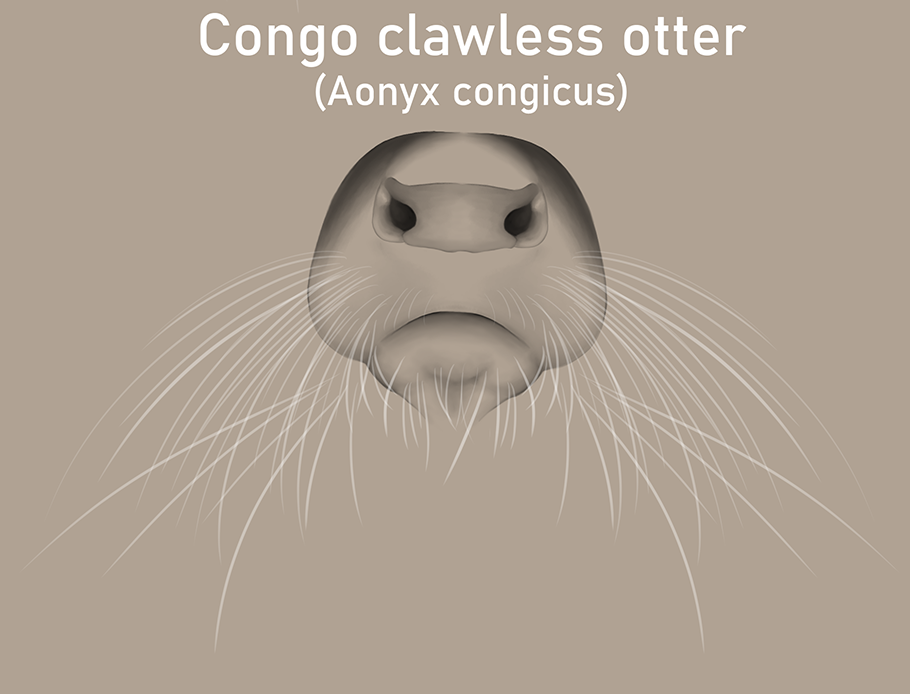
The Congo clawless otter is one of the largest African otter species.(1)(2) They are sometimes considered a subspecies of the closely related African clawless otter, but the IUCN Otter Specialist Group and the IOSF treat them as a separate species. They are also sometimes known as “swamp otters”, which is a bit misleading since they can also live in rivers and streams.(3)
Appearance
These otters are large and have very long tails. As their name implies, they lack claws on their front paws, which also lack webbing, though they do have rudimentary claws and partial webbing on their hind paws.(1)(2) There are two disconnected dark spots on the flanks of the snout and the hairs on the head and shoulders have silvery tips.(2)(3)
Habitat
They live in tropical rainforests and lowland swamp forests, and can be found in swamps, rivers and streams.(1)(2)(3) Holts are made in holes in the riverbanks, in riverbank vegetation and under tree roots.(2)
Behaviour
These otters are less aquatic than other African otter species. They use their sensitive dexterous fingers to dig for worms in the mud and remove shells from prey. They seem to be most active at night but have also been spotted during daytime.(1)(2)
Reproduction
They can breed throughout the year, as is typical for tropical species. The pups are white at birth and develop the adult coat pattern after 2 months. Sexual maturity is reached in about 2 years.(3)
Diet
In most areas they primarily eat worms, but they can also eat fish, snails, frogs and crabs.(1)
Threats
The biggest threats are habitat destruction and hunting. They are hunted for bushmeat and witchcraft.(3)

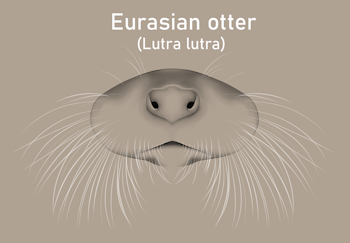
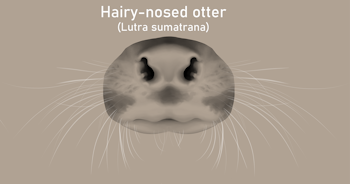
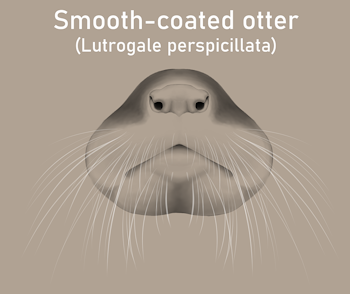
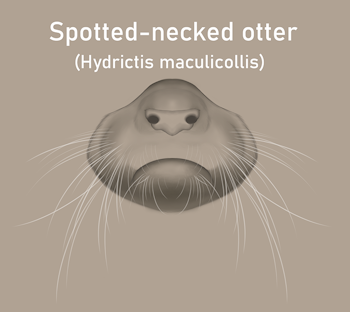
Body length: 60–100 cm / 24–39 in The Eurasian otter, also known as the European otter, has the largest range of all otter species; spanning from Ireland and North Africa in the west to Russia and Japan in the east.(1) They are medium sized otters with brown fur, the shade of which can vary a bit throughout their range. They tend to be darker in Ireland and paler in East Asia. Their size varies as well, with large otters in Russia and much smaller ones in northern Scotland, where they also have distinctly light throat patches.(1) Their fur looks spiky after they come out of the water. Eurasian otters require areas with clean fresh water and can be found in fresh water habitats, such as rivers, lakes, marshes and canals, but some live along the coast and swim in the sea, which is especially common in Scotland. Even then they always need fresh water to clean their fur.(1) Most Eurasian otters are active during the night, but in coastal areas they can also be seen during daytime. In general, Eurasian otters are territorial with males having larger territories than females. Considered the least social species of otter, the male and female usually only come together for mating, but while males are usually thought to leave after mating, family groups with up to nine members have also been observed on the Scottish isles.(1) Mating can happen any time of the year. They play with each other in the water before they mate. Gestation is about 63-65 days.(2) The female gives birth to two or three pups in a hidden holt, which is usually only accessible through an entrance under water. The pups stay inside with their mother until they are big enough to learn to swim at the age of 3-4 months. At first they don’t like the water but at the age of 5-6 months they learn to catch prey of their own.(1) Their favourite food is fish, especially eel and trout. During the winter and in colder areas they have to rely more on amphibians, particularly frogs,(1)(3) but they also aren’t afraid to enter a hole in the ice to catch subglacial fish. They may also eat insects, birds and small mammals.(1) Crabs are a more important food source in Sri Lanka.(2) The biggest threats Eurasian otters face are pollution, habitat destruction and roads. Otters are very sensitive to water quality, so before the most toxic pollutants were banned in Europe, the otter populations declined drastically and went locally extinct in the Netherlands, Belgium and Switzerland. Even with the ban on some of the pollutants, such as organochlorines and PCBs, the effects of other chemicals are still a potential risk and must be monitored.(1)(4) Right after the last recorded Dutch otter roadkill in 1989, plans were made to clean up the Dutch waterways and make the Dutch wetlands liveable again. This involved cleaning the water from pollutants, restoring bankside vegetation and placing otter tunnels underneath roads such that otters can safely get to the other side.(5)(6) In 2002 otters were released into the Weerribben and the Wieden in the province Overijssel. Since then the population has continuously increased and has surpassed the viable population threshold of 400 in the winter of 2019/2020. They have spread to other provinces and have even been spotted east of Amsterdam. Traffic casualities remain a problem in many areas though, so more otter tunnels are needed.(5)(6) Because of the success of the reintroduction as well as to bring awareness to the remaining problems, 2021 has been designated the Year of the Otter by CaLutra, the beaver and otter board of the Dutch Mammal Society.(5) Body length: 60–90 cm / 24–35 in (males), 59–70 cm / 22–28 in (females) The hairy-nosed otter is the rarest of all otter species. They were once thought to be extinct until a living otter was spotted again in 2000, and they remain elusive and mysterious.(1) Whereas most other mammals have a furless rhinarium that is typically black and moist, hairy-nosed otters have, as their name suggests, noses that are almost entirely covered with hair. Their fur is dark brown with lighter markings on their chin and throat. They are long and slender and have very long tails, giving them a rather snake-like appearance. Their paws have claws and webbing.(1) They live in a variety of aquatic environments, such as flooded forests, forest streams and swamps. They can be found especially in Melaleuca swamp forests.(1)(2) Hairy-nosed otters can live alone or in groups of up to six individuals. They can be active both day and night but seem to be the most active during the evening. Apparently because of the tidal fluctuations, they do not have fixed latrines.(1) They often climb trees to leave spraints. Breeding periods vary by region. In Vietnam it is mainly in November and December and in Cambodia it can vary from November to March. Gestation is thought to be about 9 weeks.(1) Their primary food is fish but they also eat crustaceans, water snakes, lizards, birds and amphibians.(1)(2) They are threatened by hunting and habitat destruction. Fishermen often do not like the otters since they can take fish out of their nets. Hairy-nosed otters are very sensitive to water quality which makes it a challenge to keep them in captivity.(1) Body length: 57.5–82.6 cm / 22.6–32.5 in The smooth-coated otter is found in most of the Indian subcontinent and Southeast Asia. They are closely related to Asian small-clawed otters and can interbreed with them, though this seldom occurs.(1) A hybrid population has been observed in Singapore. Unlike their smaller relatives, smooth-coated otters have large paws.(1)(2) The tracks are often more than 8 cm (3 in) wide.(1) The webbing between their digits are well developed, making them excellent swimmers. They have flattened tails(1) and, as their name suggests, they have smooth velvety fur.(2) They can be found in a wide variety of habitats such as mangrove swamps, rivers, estuaries and rice fields. They may venture into salt water but need fresh water to clean their fur. In India and Nepal they prefer rocky banks, where they can make their holts.(1)(2) Smooth-coated otters are primarily diurnal and can live in groups of up to 11 individuals, although most of them live alone or in pairs.(1) Loud screaming wails are used to warn their group members of predators such as crocodiles and tigers.(1)(2) Mating may occur throughout the year but in India and Nepal it mostly occurs from October to February. Gestation is about 60 to 63 days and up to five pups may be born.(1)(2) At three to five weeks of age the eyes start to open and weaning occurs in about 19 weeks. They reach adult size in about a year and take a few more years to reach sexual maturity.(2) Their favourite food is fish, in particular riverine catfish and false four-eyed fish,(2) but they also like to eat crabs, frogs, rats, insects and snakes.(1)(2) There is a tradition in East Asia in which fishermen use otters to catch fish.(2) This practise is in decline and now mostly restricted to Bangladesh. Three otters are typically used: two adults and one young otter in training. During the day the young otter is trained by encouraging it to chase a fish. The real fishing is done by night time. The otters chase fish into nets and also have the opportunity to catch their own fish.(2) The Bishan otter family is a family of smooth-coated otters in Singapore that gained local and international fame. They were first spotted in the Bishan-Ang Mo Kio Park in 2014 and in 2015 they moved to Marina Bay where they chased out the Marina otter family that had been living there. While many Singaporeans are reported to hold otters in high esteem, the growing population of smooth-coated otters in the city in particular has been a concern for residents who raise pet koi in private ponds. They have been blamed for the deaths of many of these expensive fish.(3) Like all Asian otter species they are vulnerable to poaching, but particularly to habitat destruction and loss of prey due to overfishing and pollution from agriculture and industry. The populations in the wild seem to have declined more than 30% in 30 years.(2)(4) Body length: 59–64 cm / 23–25 in The spotted-necked otter, also known as the speckle-throated otter, is the smallest otter of Africa.(1) They are locally known as “water hyenas”.(1) Like giant otters, they have unique patterns of spots on their necks, which allows one to distinguish individuals.(1) They are slender otters with chestnut to dark brown fur. As their name implies they typically have light spots on their throat, lips and chest. They also have well developed webbing and claws, suitable for their aquatic lifestyle.(1) Spotted-necked otters primarily live in clear rivers and lakes and require dense bankside vegetation. They prefer deeper bodies of water than other African otter species.(1)(2) They can also live in mountain streams as high as 2,500 metres (8,202 feet).(1) They are primarily diurnal animals and hunt for fish by sight.(2) They are particularly active during mornings and late afternoons,(2) but tend to be more nocturnal in South Africa.(1) Spotted necked otters are more aquatic than other African otter species(2) and never stray far from the water. They are not territorial and often form same-sex groups of up to 10 individuals.(1)(3) Spotted-necked otters can mate any time of the year. The females give birth to usually two or three cubs who stay with her for at least a year.(1) Gestation is about 60-63 days.(2) They are primarily fish eaters, but also eat frogs, crustaceans, snails and insect larvae. They may also occasionally catch birds.(2) They eat more fish in the winter when crabs are less available.(1) While the fur trade has been regulated since 1977, spotted-necked otters continue to be hunted for bushmeat and traditional medicine. The main threats however are pollution and removal of bankside vegetation, which cause degradation of suitable habitats. Overfishing may also be a problem.(2)(4) Body length: 71–76 cm / 28–30 in (males), 57–61 cm / 22–24 in (females) Old World Otters | New World Otters | Sea Otter Badgers | Ferret-Badgers | Fisher | Grisons | Martens | Otters | Tayra | Weasels | Wolverine
Tail length: 40–71 cm / 16–28 in
Weight: 14–34 kg / 31–75 lb
Lifespan: Unknown (wild), unknown (captivity)
Range: The lower Congo basin, between southeastern Nigeria and western Uganda.
Conservation status: Near threatened
Subfamily: Lutrinae
References
#4 Eurasian Otter (Lutra lutra)

Appearance
Habitat
Behaviour
Reproduction
Diet
Threats
Reintroduction to the Netherlands

Weight: 7–12 kg / 15–26 lb (males), 3–8 kg / 7–17 lb (females)
Range: The waterways and coasts of Europe, many parts of Asia, and parts of northern Africa.
Lifespan: Up to 4 years (wild), up to 22 years (captivity)
Conservation status: Near threatened
Subfamily: Lutrinae
Recognised subspecies
#5 Hairy-Nosed Otter (Lutra sumatrana)

Appearance
Habitat
Behaviour
Reproduction
Diet
Threats

Tail length: 35–50.9 cm / 13.8–20 in
Weight: 5–8 kg / 11–18 lb
Lifespan: Unknown (wild), unknown (captivity)
Range: Southeast Asia.
Conservation status: Endangered
Subfamily: Lutrinae
References
#6 Smooth-Coated Otter (Lutra perspicillata)

Appearance
Habitat
Behaviour
Reproduction
Diet
Use by fishermen
Singapore’s urban population
Threats to koi fish
Threats

Tail length: 37–43 cm / 15–17 in
Weight: 7–11 kg / 15–24 lb
Range: Most of the Indian subcontinent and Southeast Asia, with a disjunct population in Iraq.
Lifespan: Up to 10 years (wild), up to 20 years (captivity)
Conservation status: Vulnerable
Subfamily: Lutrinae
Recognised subspecies(5)
#7 Spotted-Necked Otter (Hydrictis maculicollis)
This species shares the common name “otter”, but is not directly related to other species on this page.
Appearance
Habitat
Behaviour
Reproduction
Diet
Threats

Tail length: 39–44 cm / 15–17 in
Weight: 5.7–6.5 kg / 13–14 lb (males), 3–4.7 kg / 6.6–10.4 lb (females)
Range: Sub-Saharan Africa.
Lifespan: Up to 8 years (wild), up to 14 years (captivity)
Conservation status: Near Threatened
Subfamily: Lutrinae
References