Table of Contents
- • Marine Otter (L. felina)
- • Mesoamerican Otter (L. annectens)
- • Neotropical Otter (L. longicaudis)
- • North American River Otter (L. canadensis)
- • Southern River Otter (L. provocax)
- The species below are not directly related to those above.
- • Giant Otter (P. brasiliensis)
#1 Marine Otter (Lontra felina)


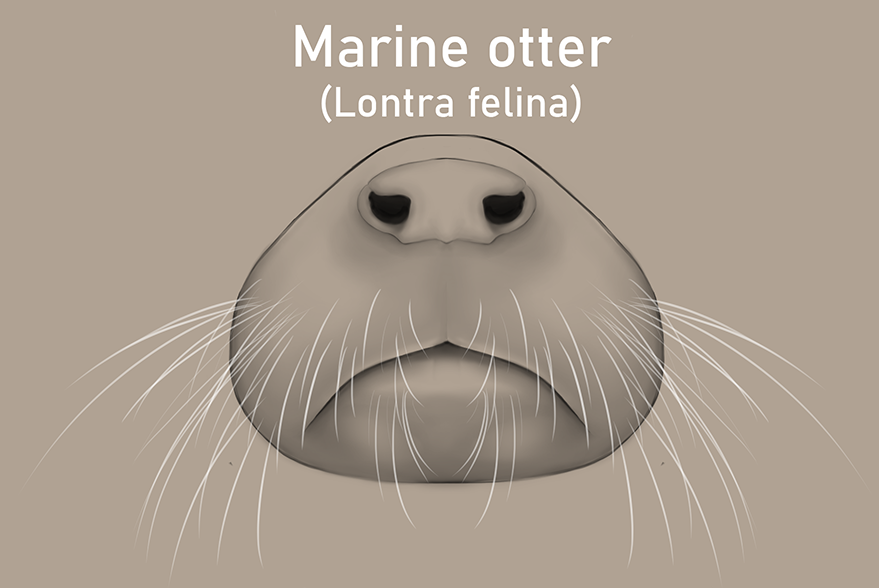
The marine otter is one of the smallest otter species and the smallest of all marine mammals. This small size enables them to hunt between the boulders on the sea floor.(1) In Chile they are known by the name “chungungo”, and another common Spanish name is “gato marino” meaning “sea cat”.
Appearance
They have dark brown fur with long sturdy guard hairs that stand almost erect, giving them a spikey appearance. Their underside is a bit paler. Their spikey guard hairs protect them well from the cold sea water and the heavy weather. Unlike most other otter species, they do not have to seek fresh water to wash the salt off. They do frequently have to groom their fur however. Their paws are fully webbed and the pads are covered in fur as protection against the rough rocky surface.(2)
Habitat
Marine otters are found in littoral zones; their territories cover long expanses of shoreline (up to four kilometres), but they rarely go more than 100 metres (328 feet) from the land.(3) Caves and crevices in rocks are used as holts for resting.(2)
Behaviour
Marine otters are the least aquatic of all otter species, and spend on average 81% of their time on land, mostly resting. They are seemingly diurnal, but have been extensively observed out at night as well. They are mostly solitary, but they have been found in groups of three. It is unknown whether they are territorial; males have been observed fighting, but such fighting has been observed among mating pairs as well.(3)
Reproduction
Marine otters can be monogamous or polygamous, and breed in December and January. Gestation lasts from 60 to 70 days, and they produce anywhere from two to five pups.(3) The pups stay with their mother for about 10 months, during which they learn everything they need to know in order to survive on their own.(2)
Diet
Their prey include crustaceans, mollusks and fish.(4) A study on Chiloé Island suggests their favourite prey is the kelp crab.(2) They may also eat fruit, such as chupones.(4)
Threats
These otters used to be hunted, which drastically reduced their numbers, removing them from most of Argentina and the Falkland Islands. They are now protected in Chile, Peru and Argentina. Poaching, habitat loss and pollution remain problems, as does competition with fishermen.(2)(4)

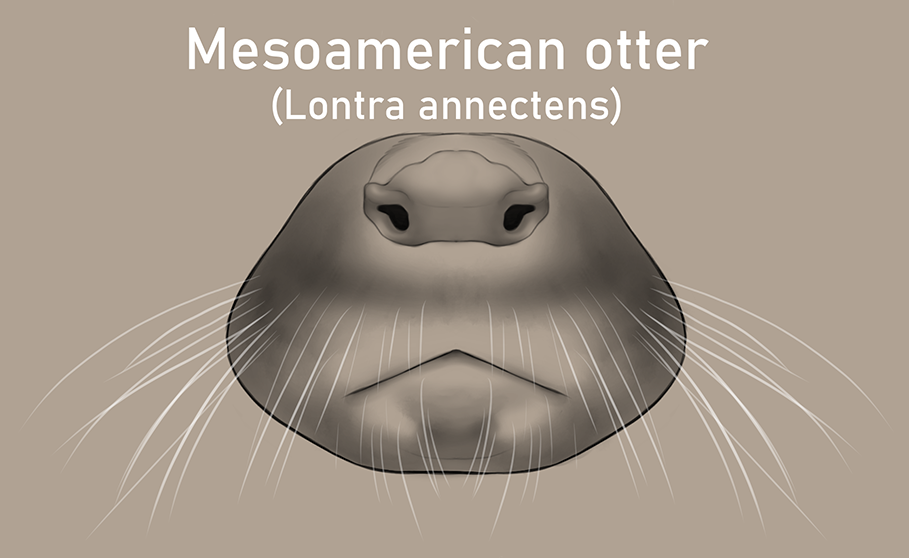
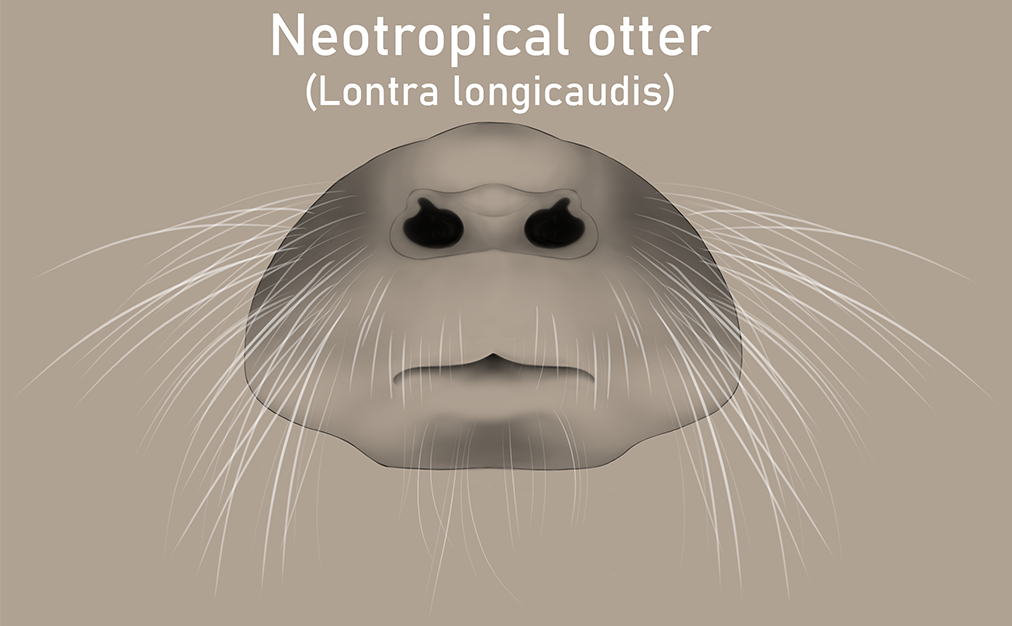
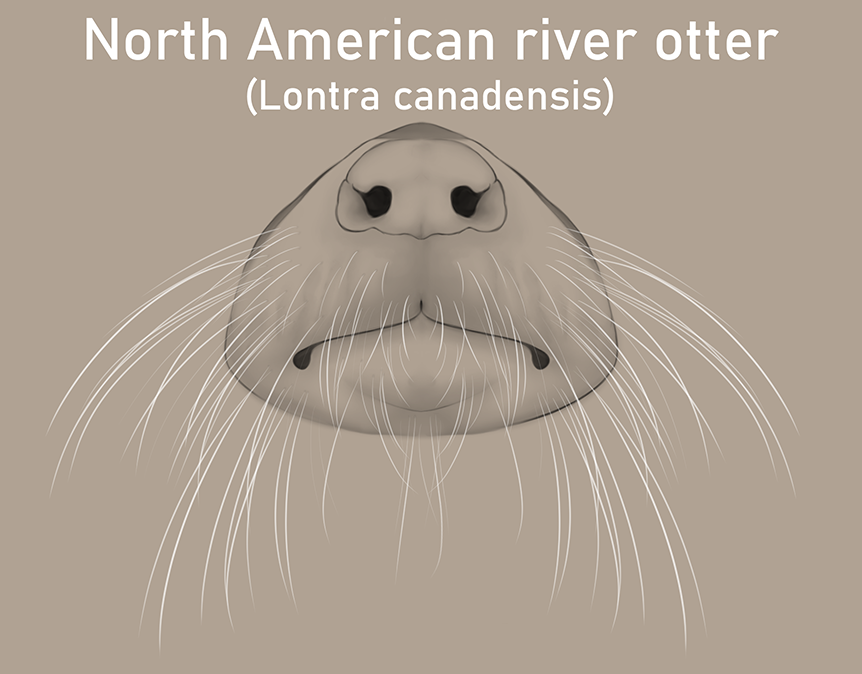
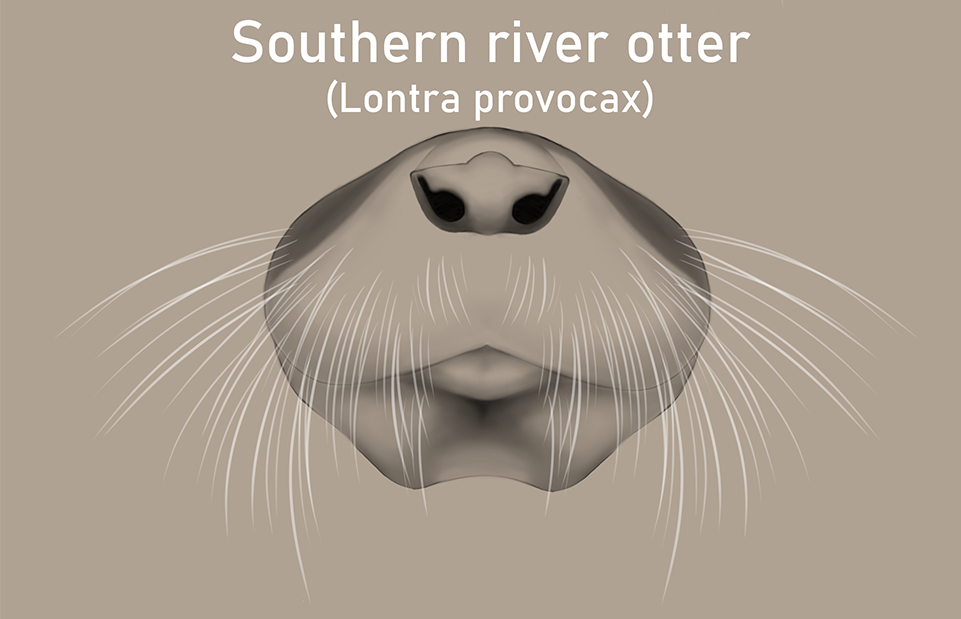
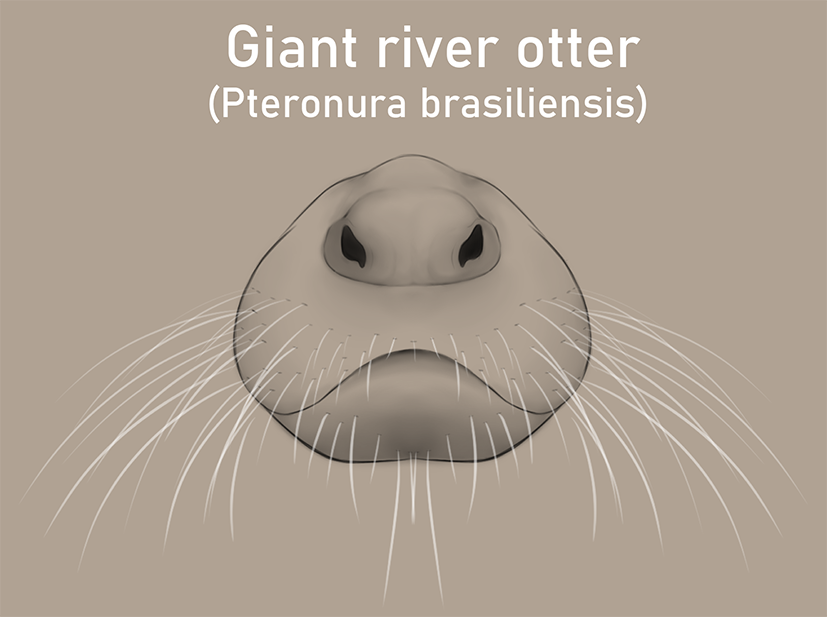
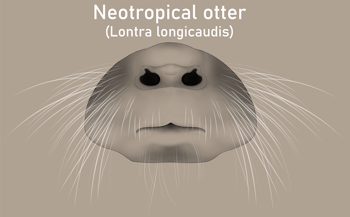
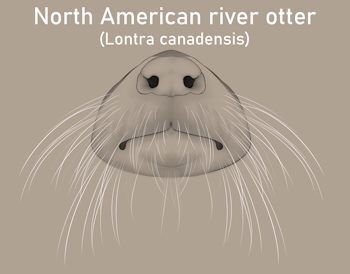
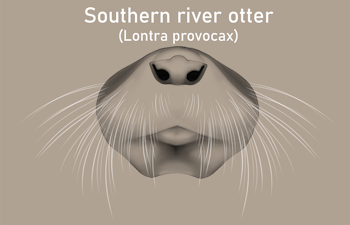
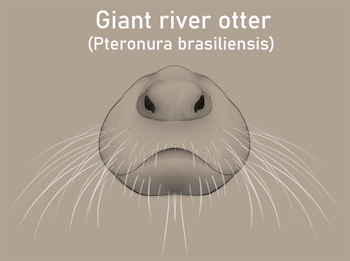
Body length: 87–115 cm / 34–45 in The Mesoamerican otter, also known as the Northern Neotropical otter, or Northern Neotropical river otter, was once considered a subspecies of the Neotropical otter, until genome-wide nuclear data analysis revealed a genetic divide between trans-Andean and cis-Andean neotropical otters usually classified as L. longicaudis.(1) This taxonomic split was accepted by the American Society of Mammalogists.(2) The species extends from northern Mexico to the western Andes in Venezuela, Colombia, Ecuador, and Peru.(3) Although the species looks similar to the Neotropical otter, there are distinctions that are both genetic and physiological. The research focused on genetics, which demonstrated that there are indeed two distinct species, and physical differences were also observed. For instance, the rhinarium (nose) of the Mesoamerican otter is round and quite prominent, while the Neotropical otter features a significantly smaller band-like rhinarium or nearly no rhinarium whatsoever. The skull composition also varies, further distinguishing the Mesoamerican otter from the Neotropical otter.(4) The species lives at altitudes from sea level to 3,600 meters (2.2 miles) above sea level in mostly swamp forests and smaller water bodies.(3)(4) . They are a solitary species, typically reproducing once a year and giving birth to one to four pups.(3) The species exhibits crepuscular and nocturnal behaviours, feeding primarily on fish (80%), crustaceans, molluscs, and various vertebrates like amphibians, birds, and, small mammals.(3)(4) The Mesoamerican otter is threatened by habitat destruction, pollution, overfishing, changes in rainfall patterns due to climate change, and watershed degradation. Predators include jaguars, feral dogs, crocodiles.(3) Body length: References The Neotropical otter, also known as the Neotropical river otter, or Central Neotropical river otter, has the widest range of all South American otter species, ranging from northwest Mexico to central Argentina.(1)(2) Relative to body size they have the longest tails of all otter species, which is why they are also known as “long-tailed otters”. Their tails are long and cylindrical in shape and take up more than one third of their total length.(3) Their fur is dark greyish brown and is lighter on the underside. They have small paws with fully webbed digits.(1) They are a versatile species of otter and can adapt to a wide variety of habitats,(2) from cold, glacial lakes to warm rainforests, from natural rivers and streams to rice fields and drainage ditches, from coastal swamps to mountain streams up to 3,000 metres (9,842.5 feet) above sea level.(1)(2) They tend to prefer deep water and require lush vegetation on riverbanks.(2) These otters are thought to be solitary animals but have also been observed in small groups in Uruguay.(1) They are usually active during the day, in particular mid to late afternoon, but may be more nocturnal in areas with a lot of human activity.(1)(2) In temperate areas they breed mostly in the spring, but they can breed throughout the year in tropical areas.(1)(2) Gestation is about 56 days(2) and the females give birth to one to five cubs at a time, but most cubs do not survive into adulthood.(1) The mother raises her cubs alone without help from the father.(2) Neotropical otters are mostly fish eaters, but they also feed on crustaceans and occasionally molluscs.(1) Their diet varies between different habitats and seasons.(1) They eat more frogs in the dry season, when fish and crustaceans are less available and frogs are easier prey due to their mating season.(4) Crustaceans are a more important food source in coastal areas.(2)(4) In the Biological Reserve of Tirimbina in Costa Rica, it was observed that otters ate a lot of shrimp, but on the Río Yaqui in Mexico, they preyed more on aquatic birds.(1) Neotropical otters may also prey on small mammals, reptiles and insects.(1)(2) Hunting used to be common, especially in the 1970s, but these otters are now fully protected, however forest destruction and water pollution are now their main threats.(1) Body length: 50–79 cm / 20–31 in The North American river otter, also known as the northern river otter or the common otter, is native throughout the inland waterways and coastal areas of North America. North American river otters are relatively large otters and have large noses, long thick necks and thick tails.(1) Some older otters develop black spots on their muzzles, but this is far from universal.(2) They can live in a wide variety of environments, such as rivers, lakes, marshes, swamps, estuaries and coasts. They can deal with the extreme heat of the Mojave Desert, but the frigid winters of Yellowstone are no problem for them either.(1) North American river otters can live alone but also in groups.(1) Strength in numbers can especially be useful in areas with a lot of enemies such as coyotes, since a lone otter is a relatively easy target, but a group is quite capable of fending off predators.(3) Adult male otters often form groups of independent hunters without any specific dominant individual.(1)(2) Mating season is from the end of winter to the beginning of spring. The mother is ready to mate again after her cubs are born, but due to delayed implantation, she will not give birth again until her current litter is a year old and ready to become independent.(1)(3) They prefer to eat fish, especially perch, suckers and catfish, but they also consume small mammals, birds, amphibians, reptiles and crustaceans, especially crayfish.(1)(4) One time an otter was even observed to eat a python.(1) Body length: 66–107 cm / 26–42 in The southern river otter has the most restricted range of all otter species, ranging from Chile to the southern part of Argentina. They are locally known by the name “huillín”. They are medium sized otters with prominent whiskers and well developed claws and webbing. They have dark brown fur and are lighter on the underside, with grey spots on the throat.(1) These otters can live in both fresh water and marine habitats. They require vegetation on riverbanks for shelter and cannot live in areas without crustaceans, therefore they generally do not live in altitudes above 300 metres (984 feet).(1) In coastal areas their range overlaps with the marine otter. An isolated population exists on Isla de los Estados. Unlike marine otters though, coastal southern river otters tend to avoid windy wave-exposed areas and prefer abundant cover of vegetation.(2) Southern river otters are nocturnal and solitary. They make their holts under tree roots and in rock crevices within usually about 50 metres (164 feet) distance from water.(1) Southern river otters tend to mate in the winter months of July and August. Due to delayed implantation the cubs are born a year later. The litter consists of one to four cubs, usually two, and they stay with their mother for about a year.(1) The greatest part of their diet consists of crustaceans, in particular crabs and crayfish, though they tend to eat more fish in coastal areas. They may also prey on mollusks, birds and amphibians.(1) Southern river otters are vulnerable to habitat destruction and poaching. The draining of wetlands and canalisation causes a loss of suitable habitats. Coastal otters also suffer from competition from Chilean fisheries. It’s also been thought that the introduced North American mink may compete over food and thereby put pressure on the otter population, but research suggests that it is actually the otters who keep the mink population under control.(1)(2) Body length: 65–71 cm / 25.5–28 in The giant otter, also known as the giant river otter, or misleadingly called a river wolf, is native to the inland areas of northern South America. As their name implies, these otters are not only the longest otters, but also the longest mustelids. With their huge size they are top predators of the Amazon, even capable of killing caimans; though with difficulty. Giant otters are some of the most unique-looking otters, having unusually flat tails that are almost wing-like in shape. Like hairy-nosed otters, giant otters have noses that are almost entirely covered with hair. They also have some of the most well developed webbing between their digits, which makes them excellent swimmers. One of their most striking features is their throat spots, which form a unique pattern in each individual like a finger print and can be used to recognise each other.(1) They live in the Amazon, primarily in slow moving rivers, streams and lakes with lush bankside vegetation, especially oxbow lakes with large fish populations.(1)(2) They may also occasionally occur in agricultural canals, drainage channels and reservoirs of dams.(2) Giant otters live in large family groups of up to about 10 individuals. When the older otters go hunting, the younger adults take care of the pups. Pups learn to hunt when they are weaned at the age of 9 months. They take about 2 years to mature. They are the most social and noisiest of all otter species. They are capable of producing many different sounds.(1) There is one dominant mating pair in a group and they typically produce one litter a year. Gestation is about 64 to 77 days. The litter consists of one to six pups, though rarely more than four, and stays inside the holt for two to three months after birth.(1)(2) Their favourite prey is fish, particularly catfish and characins, such as piranhas, but they can also eat crabs, birds, mammals and reptiles, even large ones such as anacondas and young caimans.(1)(2) The giant otter population has been devastated by the fur trade from the 1940s to the 1970s and has dropped by 80%. Hunting started being banned in the 1970s but poaching still goes on. Pollution and habitat destruction are also problematic. Pollution has been caused by gold mining with the use of mercury.(1)(2) In May of 2021, a lone giant otter was discovered in Bermejo River in Impenetrable national park, in north-east Argentina’s Chaco province. The species had not been seen in the country since the 1980s.(3)(4) Body length: 1.5–1.8 m / 5–6 ft (males), 1.5–1.7 m / 5–5.5 ft (females) Old World Otters | New World Otters | Sea Otter Badgers | Ferret-Badgers | Fisher | Grisons | Martens | Otters | Tayra | Weasels | Wolverine
Tail length: 30–36 cm / 12–14 in
Weight: 3–6 kg / 6.6–13 lb
Range: From the coast along southwestern South America to southern Argentina.
Lifespan: Unknown (wild), not unknown (captivity)
Conservation status: Endangered
Subfamily: Lutrinae
References
#2 Mesoamerican Otter (Lontra annectens)

Appearance
Habitat
Behaviour
Reproduction
Diet
Threats

Tail length:
Weight: 8-15 kg / 17.6-33 lb(3)
Lifespan:
Range: From northern Mexico to the western Andes in Venezuela, Colombia, Ecuador, and Peru.
Conservation status: To be determined.(4)
Subfamily: Lutrinae
#3 Neotropical Otter (Lontra longicaudis)

Appearance
Habitat
Behaviour
Reproduction
Diet
Threats

Tail length: 37–57 cm / 15–22 in
Weight: 5–15 kg / 11–33 lb
Lifespan: Up to 11 years (wild), up to 15 years (captivity)
Range: Northwest Mexico to central Argentina and the island of Trinidad.
Conservation status: Near threatened
Subfamily: Lutrinae
Recognised subspecies
#4 North American River Otter (Lontra canadensis)

Appearance
Habitat
Behaviour
Reproduction
Diet

Tail length: 30–45 cm / 12–51 in
Weight: 5–14 kg / 11–31 lb (males), 8.3 kg / 18 lb (females)
Lifespan: Up to 9 years (wild), up to 21 years (captivity)
Range: Throughout North America
Conservation status: Least concern
Subfamily: Lutrinae
Recognised subspecies(5)
#5 Southern River Otter (Lontra provocax)

Appearance
Habitat
Behaviour
Reproduction
Diet
Threats

Tail length: 35–45 cm / 14–18 in
Weight: 5–9 kg / 11–20 lb
Range: Chile and Argentina.
Lifespan: Up to 10 years (wild), unknown (captivity)
Conservation status: Endangered
Subfamily: Lutrinae
References
Lontra provocax. The IUCN Red List of Threatened Species 2021: e.T12305A95970485.
https://dx.doi.org/10.2305/IUCN.UK.2021-3.RLTS.T12305A95970485.en#6 Giant Otter (Pteronura brasiliensis)
This species shares the common name “otter”, but is not directly related to other species on this page.
Appearance
Habitat
Behaviour
Reproduction
Diet
Threats
Rediscovery in Argentina

Weight: 23–32 kg / 51–70 lb (males), 20–29 kg / 44–64 lb (females)
Lifespan: Up to 8 years (wild), up to 17 years (captivity)
Range: Northern inland areas of South America.
Conservation status: Endangered
Subfamily: Lutrinae
Recognised subspecies(5)